
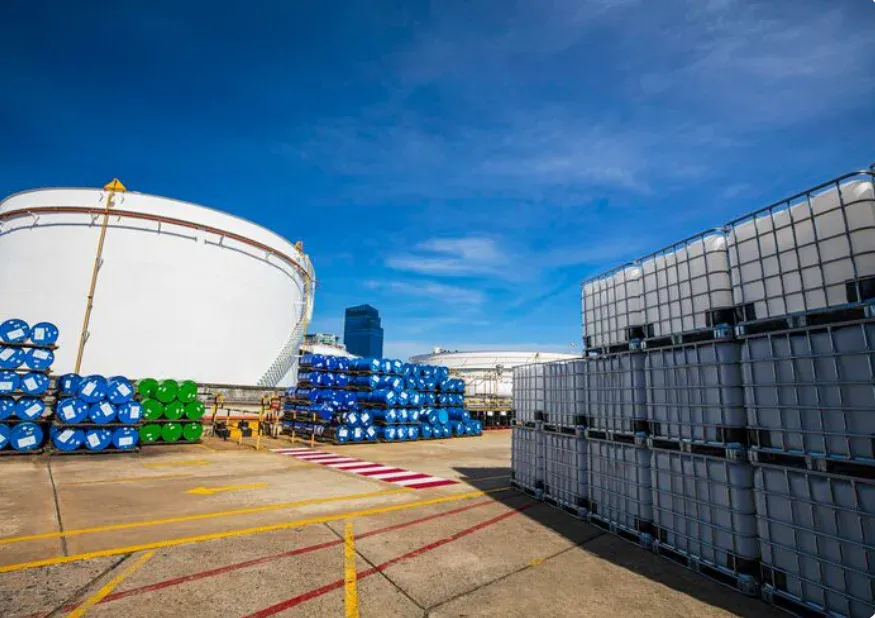
Chemical demand rarely increases in a perfectly predictable line. A formulation that once required occasional small batches can become a recurring production requirement as sales increase, facilities expand, or the chemistry becomes more deeply integrated into an industrial process.
Eventually, the question changes from “Can we make this internally?” to “Should our operation still be responsible for making this at the volume we now require?”
That transition is where bulk chemical tolling becomes strategically important. Rather than continuing to dedicate internal labor, equipment, storage, and production time to increasingly large chemical batches, manufacturers can transfer production to an experienced chemical manufacturing partner.
The objective is not simply outsourcing work. Bulk chemical tolling creates a more structured production model built around capacity, repeatability, quality requirements, packaging, traceability, and dependable recurring supply.
What Is Bulk Chemical Tolling?
Bulk chemical tolling is the outsourced manufacturing of chemical products at commercial volumes according to defined formulation, processing, quality, and packaging requirements.
In many tolling arrangements, the customer already has an established formula or product specification. The toll manufacturer assumes responsibility for producing that chemistry under an agreed manufacturing process.
This differs from purchasing a standard chemical product from a catalog. Toll manufacturing is typically tied to a particular formulation, specification, application, or customer program.
It also differs from custom chemical formulation. Formulation work focuses on developing or modifying the chemistry itself, while chemical tolling focuses primarily on reliably manufacturing chemistry that has already reached an established production stage.
When Internal Chemical Production Becomes a Capacity Problem
Producing chemicals internally often works well at smaller volumes. Personnel understand the formulation, existing equipment handles the batches, and production fits around other operational responsibilities.
Higher demand changes that equation.
Larger or more frequent batches require additional production time. Raw material requirements increase. Storage becomes more complicated. Packaging consumes additional labor. Quality documentation becomes more important, and equipment availability becomes a scheduling issue.
At that point, chemical production starts competing with the company’s primary operations.
An organization whose core business is machining, fabrication, coatings, printing, transportation, manufacturing, or another industrial process must determine whether using internal resources to manufacture increasingly large quantities of chemistry remains the best use of those resources.
The answer frequently becomes clearer once chemical production begins creating bottlenecks elsewhere in the plant.
Bulk Chemical Tolling Separates Growth From Internal Capacity
One of the most important advantages of bulk chemical tolling is that increasing chemical demand no longer has to translate directly into increasing internal manufacturing requirements.
Without toll manufacturing, scaling production internally can require investments in:
- Mixing and processing equipment
- Tanks and storage systems
- Material handling
- Packaging equipment
- Production floor space
- Additional operators
- Quality control resources
- Raw material inventory
- Documentation systems
- Maintenance and cleaning
These requirements extend well beyond purchasing a larger mixing vessel.
A production system must support the complete process around the chemistry. Raw materials have to arrive, materials must be handled correctly, batches must be produced consistently, finished products require verification, containers need to be filled, and inventory has to move through the facility.
A qualified toll manufacturer already operates around these chemical manufacturing requirements.
That allows the customer to scale chemical supply without building an entirely new internal production function around increasing demand.
Greater Volume Makes Batch Consistency More Important
Consistency becomes increasingly important as chemical volume increases.
A small variation in an occasional batch creates a limited operational problem. Recurring variation across large production quantities creates a much larger downstream issue.
Depending on the chemistry and application, inconsistent batches can affect cleaning performance, lubrication, residue, surface condition, corrosion protection, coating processes, equipment performance, or finished-product quality.
Bulk chemical tolling establishes production around defined requirements rather than repeatedly treating each batch as an isolated manufacturing event.
An effective tolling program documents critical factors such as:
- Formula requirements
- Raw materials
- Processing requirements
- Quality expectations
- Finished-product specifications
- Batch identification
- Packaging
- Production records
This structure supports repeatability as demand increases.
Toll Manufacturing Reduces Competition for Internal Equipment
Equipment utilization is another reason manufacturers eventually move chemical production outside their own facilities.
Equipment has an opportunity cost.
A tank, mixer, filling station, production area, or employee dedicated to chemical blending cannot simultaneously support another part of the operation.
This becomes especially problematic when chemical demand increases unevenly.
Internal teams can find themselves shifting schedules around chemical production, delaying other work, or dedicating equipment to a process that falls outside the company’s primary revenue-generating activities.
Bulk chemical tolling separates those requirements.
The chemical manufacturer handles the production process while the customer retains its equipment, people, and floor space for the activities central to its own business.
Higher Volumes Increase the Importance of Production Planning
Making one successful batch is different from maintaining reliable supply over months or years.
Once an industrial operation depends heavily on a particular chemistry, chemical availability becomes part of overall production reliability.
Running short creates consequences far beyond the cost of the chemical itself.
A missing cleaner, lubricant, treatment chemical, process fluid, or specialty formulation can interrupt the operation that depends on it. Production teams then face expedited purchasing, emergency production, substitutions, scheduling changes, or downtime.
A structured bulk chemical tolling program treats supply as a recurring manufacturing responsibility.
Expected consumption, batch quantities, production schedules, packaging, inventory requirements, and future demand become part of the manufacturing relationship.
That creates a stronger foundation for scaling chemical consumption than continually increasing internal batches whenever inventory reaches a critical level.
Raw Material Management Becomes More Complex at Scale
Higher chemical production also means higher raw material consumption.
An operation that previously purchased modest quantities of several ingredients can suddenly find itself coordinating substantially more inventory across multiple materials.
Every additional raw material introduces operational responsibilities involving purchasing, receiving, storage, handling, inventory management, production scheduling, and documentation.
This creates another important distinction between laboratory-scale thinking and commercial production.
The chemical formula itself might remain exactly the same while the operational infrastructure required to manufacture it changes significantly.
Bulk chemical tolling places those manufacturing responsibilities into a production environment specifically structured around chemical processing.
Packaging Is Part of the Scale-Up Process
Scaling chemical production does not end when the batch is finished.
Finished chemistry still has to move efficiently through the customer’s supply chain.
A company using relatively small amounts of a product might originally rely on smaller containers. Higher consumption often creates demand for drums, totes, or bulk deliveries.
Packaging strategy affects:
- Material handling
- Storage requirements
- Production efficiency
- Container disposal
- Inventory management
- Transportation
- Plant-floor dispensing
An experienced bulk chemical tolling partner evaluates packaging as part of the production program rather than treating it as an afterthought.
For example, PICO Chemical states that its production capabilities extend from pilot work through full manufacturing, with packaging available in pails, drums, totes, and bulk formats.
Bulk Chemical Tolling Also Creates a Clearer Path From Pilot Production to Commercial Volume
Some chemical programs do not immediately begin at high volume.
A product can move through several stages:
- Laboratory development
- Testing and validation
- Pilot production
- Initial commercial manufacturing
- Recurring bulk production
Problems emerge when the infrastructure responsible for one stage is forced to handle every stage.
Laboratory equipment is not designed for commercial manufacturing. Pilot production systems have practical limits. Internal manufacturing setups that were acceptable during product development become inefficient as demand increases.
The strongest toll manufacturing relationships account for this progression.
When a chemical manufacturer also provides formulation, laboratory testing, pilot production, and bulk manufacturing, the transition between development and recurring production becomes more structured.
PICO Chemical, for example, publishes capabilities covering custom formulation and laboratory testing alongside custom chemical blending and bulk chemical tolling. Its stated laboratory capabilities include compatibility and stability testing, pH and viscosity measurements, residue analysis, and product validation.
What Should Companies Look for in a Bulk Chemical Tolling Partner?
Capacity alone does not make a chemical manufacturer the right tolling partner.
Companies evaluating bulk chemical tolling should determine whether the manufacturer can support the complete operational requirements surrounding the product.
Important questions include:
Does the manufacturer understand the chemistry?
Production equipment matters, but technical understanding matters as well. The manufacturer needs sufficient familiarity with the chemical category and manufacturing process.
Can production requirements be clearly documented?
Specifications, processing requirements, quality expectations, and packaging requirements should be established before recurring manufacturing begins.
Is traceability built into production?
When questions arise, production teams need the ability to identify batches and review the relevant manufacturing history.
Can the manufacturer support the required packaging?
The correct manufacturing volume has limited value if the finished product cannot efficiently enter the customer’s operation or distribution system.
Is there room to scale?
A tolling relationship should address current requirements while establishing a production path that does not immediately create another capacity problem.
Is technical support available when requirements change?
Industrial processes evolve. Materials, equipment, operating conditions, and customer requirements change. Access to technical resources becomes increasingly important when chemistry is tied closely to production performance.
Bulk Tolling Is Ultimately a Capacity Strategy
The strongest reason to consider bulk chemical tolling is not simply that an external manufacturer can make a chemical.
The value is that chemical production stops being an internal capacity constraint.
Operations can continue increasing chemical consumption without continually expanding their own blending infrastructure. Production personnel remain focused on core manufacturing. Equipment stays available for higher-value internal processes. Chemical batches follow more structured production requirements, and supply becomes part of a defined recurring manufacturing program.
For industrial companies experiencing sustained growth in chemical demand, that distinction matters.
There is a point where continuing to produce chemistry internally creates more operational complexity than strategic value. Recognizing that threshold early allows companies to build a more dependable path from smaller-scale production to recurring commercial volumes.
Frequently Asked Questions About Bulk Chemical Tolling
What is the primary purpose of bulk chemical tolling?
Bulk chemical tolling allows a company to outsource recurring chemical manufacturing to a specialized producer. The toll manufacturer produces the chemistry according to established formulation, processing, quality, and packaging requirements while the customer avoids expanding its own chemical production infrastructure.
When should a company consider outsourcing chemical production?
The strongest indicators include insufficient internal production capacity, recurring equipment conflicts, increasing labor demands, packaging bottlenecks, inconsistent batches, growing raw material requirements, and chemical production pulling resources away from the company’s primary operations.
Is toll manufacturing only appropriate for extremely large chemical volumes?
No universal volume threshold defines when toll manufacturing becomes appropriate. The decision depends on production frequency, chemistry, equipment requirements, operational complexity, packaging, labor requirements, and the customer’s internal manufacturing capacity.
What is the difference between custom chemical blending and bulk chemical tolling?
Custom chemical blending describes manufacturing chemistry around defined formulation or application requirements. Bulk chemical tolling places greater emphasis on outsourcing recurring commercial-scale production. The services overlap, but tolling generally involves a broader production program involving volume, repeatability, traceability, packaging, and supply continuity.
Can an existing formulation be transferred to a chemical toll manufacturer?
Yes. Established formulations are a common basis for toll manufacturing programs. The manufacturer and customer establish the relevant specifications, process requirements, quality controls, packaging expectations, confidentiality requirements, and commercial terms before recurring production begins.
Why is traceability important in bulk chemical production?
Traceability connects finished batches with relevant production information. When an operational or quality question arises, production history provides a factual foundation for troubleshooting rather than forcing teams to rely on assumptions.
Building a More Reliable Production Model
Chemical production requirements change as companies grow.
A process that made perfect operational sense at a smaller volume does not have to remain internal indefinitely.
When chemical demand begins consuming excessive production time, labor, equipment, or plant capacity, bulk chemical tolling provides a structured way to move beyond those limitations.
The objective is straightforward: keep the required chemistry available without allowing chemical manufacturing itself to become the next production bottleneck.
For companies evaluating that transition, working with an established industrial chemical manufacturer such as PICO Chemical provides a path for reviewing production requirements, packaging needs, quality expectations, and the appropriate route from existing production into larger recurring volumes. PICO states that its tolling operation supports customer specifications, traceability, and production from pilot quantities through bulk formats.